Training and qualifications in the UK
Construction NVQ On-site Assessment Explained
7 November 2026
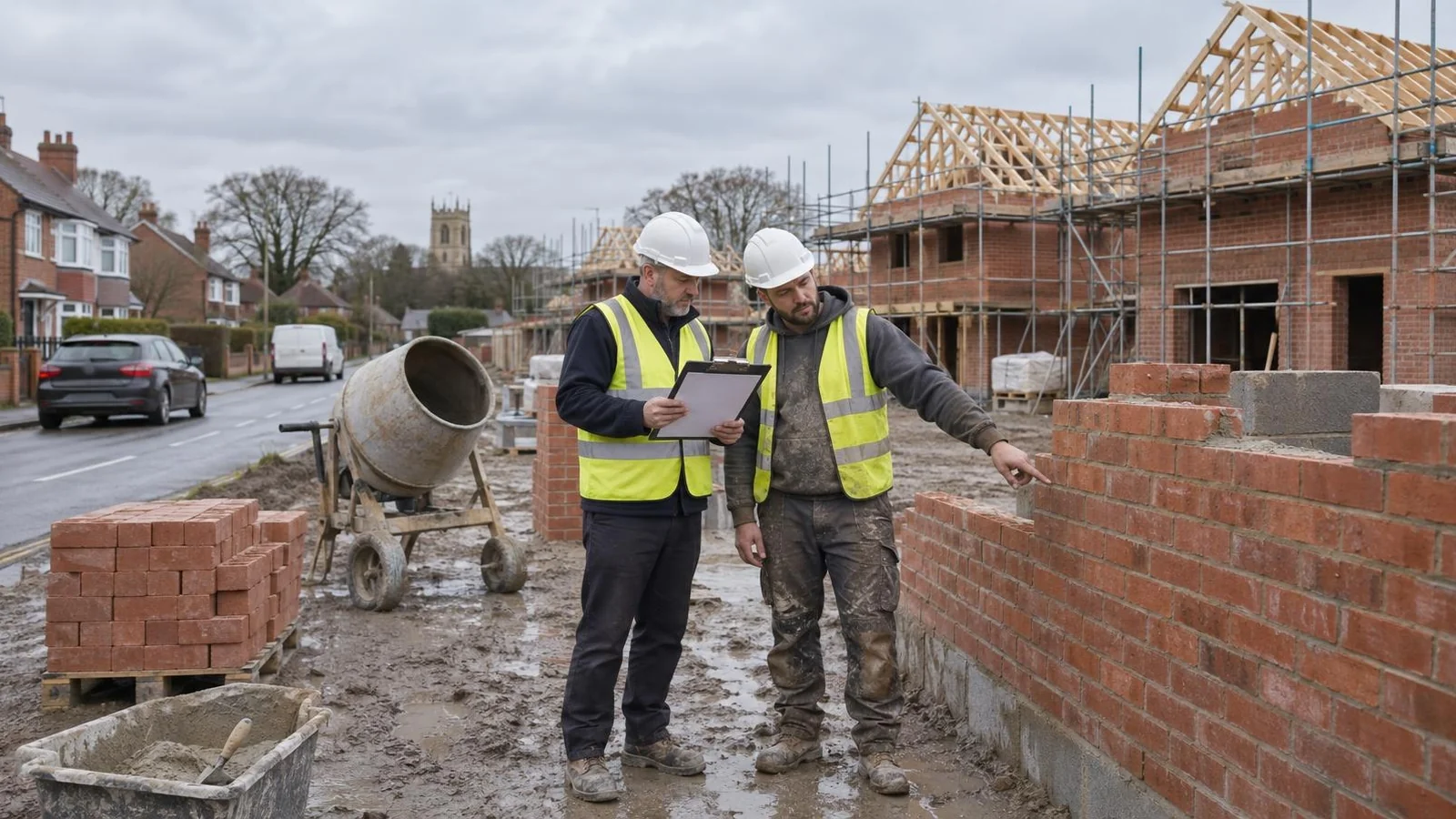
Construction NVQ on-site assessment explained simply: a qualified assessor visits your workplace, watches you do your normal job and checks your evidence against the standards for your trade. Knowing how it works helps you gather the right evidence from day one and avoid delays.
Quick answer: In a construction NVQ on-site assessment, an assessor observes you at your usual workplace, reviews evidence of your work and asks questions about what you do and why. They then decide whether you’ve met the requirements for each unit.
Key Takeaways
Assessment takes place at your real workplace, and direct observation is the main source of evidence.
Assessors also use photographs, drawings, witness testimony and professional discussion.
Assessors need current experience of your trade and an assessor qualification, or to be working towards one.
Simulation is the exception, and it can’t be the only evidence for a unit.
If evidence is missing, you can usually add more or arrange another observation.
Construction NVQ on-site assessment process in the UK
On-site assessment is designed around your everyday work. An assessor visits your workplace, whether that’s a new development or a refurbishment job, and sees you carry out tasks as you normally would.
CITB’s assessment strategy for construction NVQs says direct observation in the workplace by a qualified assessor is the primary source of evidence. Knowledge and understanding should also come mainly from the workplace, through observation and questions. That’s why the assessment feels different from an exam: you’re showing what you do, not revising for a test.
Who carries out your on-site assessment?
Under the same strategy, assessors need relevant, current experience of the work at or above the level they’re assessing, and they may only assess in their own area of competence. They must also hold, or be registered and working towards, an approved assessor qualification, such as the Level 3 Certificate in Assessing Vocational Achievement.
Assessment locations across the UK
Your assessor normally comes to you, so there’s no test centre to travel to. Check before you enrol that the provider’s assessors cover your area, and tell your employer or site manager about visits in advance so that access can be arranged. In Scotland, the equivalent qualification is an SVQ, which has its own assessment strategy.
What is a construction NVQ assessment? Steps and standards explained
A construction NVQ assessment is a structured way to prove, through your daily work, that you meet the standards for your role. Those standards are the National Occupational Standards, which describe the competence a job needs.
The process usually starts with an induction, where the assessor explains the requirements and agrees a plan. You then build up evidence as you work, the assessor observes you on site, and they may hold a professional discussion to explore your knowledge. If you’re still deciding on a provider, see how to choose a construction NVQ course first.
Construction site assessment criteria and methods
The criteria depend on your NVQ and trade, so ask to see them at the start. Direct observation comes first, supported by professional discussion and the evidence you’ve collected. Assessors look at your work as a whole rather than one task at a time, so a single job can cover several requirements.
Evidence used in construction NVQ assessments
CITB’s strategy lists witness testimony, statements from you, products of your work, drawings, plans, customer feedback, photographs and videos as examples of evidence. Some providers ask you to build a portfolio, while CITB’s own assessment service says its assessor records the information for you. Ask how yours works, because it affects how much paperwork you’ll have.
Understanding what counts as competence
An NVQ measures competence rather than exam marks. Evidence must be valid, authentic, reliable, current and sufficient, and you need to show competence over a period of time and on a consistent basis. One good day on site isn’t enough on its own.
How assessors decide competence
Assessors combine observation, questioning and your evidence to judge each requirement, and they must be able to show how they reached their decision. If evidence is lacking in any area, you may be asked to provide more or arrange a further observation. Some qualifications may also include a skills test as a final demonstration.
Common challenges in NVQ assessments
Many candidates find it hard to gather enough varied evidence, or to understand the wording of the standards. Others feel nervous about being observed, or about explaining their work out loud. Asking questions early and keeping evidence as you go makes both easier.
How to prepare for your construction NVQ on-site assessment
Start by asking your assessor or provider for the requirements for your qualification. Knowing what’s needed helps you spot useful evidence as it happens.
Keep your documents and photos labelled by date and job, and check they show your own work. If you’re unsure what counts, ask your assessor. It’s also worth practising how you’d explain a job, because you’ll need to do that in a professional discussion.
Tips for a smooth NVQ assessment day
Be on time and tell your supervisor when the assessor is due.
Keep your paperwork, digital evidence and ID in one place.
Be honest about gaps in your experience, so that you can plan how to fill them.
Listen to feedback during and after the visit, because it shows you what’s still needed.
What happens if you need further evidence?
If you don’t meet every requirement on the first visit, don’t panic. NVQ assessment usually takes multiple visits. Your assessor will tell you what’s missing, and you can gather more evidence or arrange another observation.

Construction NVQ standards, regulations and who sets the rules
Several bodies have a role. CITB is the standards setting body for construction and developed the assessment strategy, while Ofqual regulates NVQs and awarding organisations in England. Wales and Northern Ireland have their own regulators.
Assessment centres have internal quality assurers, and awarding organisations carry out external quality assurance. These checks help make sure assessors reach fair and consistent decisions. If you’re unhappy with how you’ve been assessed, raise it with the centre first, then with the awarding organisation.
Why the standards matter in construction
The standards cover more than technical skill. Because an NVQ is tied to national standards, it gives employers a common way to judge what you can do when you move between employers and sites.
Table: Construction NVQ Assessment Methods and Their Uses
Assessment Method | Description | When Used |
|---|---|---|
Direct Observation | Assessor watches you carry out tasks on your actual site | The primary source of evidence |
Portfolio Evidence | Documents, photos and records of your work | Supports observation with evidence from your job |
Professional Discussion | Structured conversation about your work and decisions | Tests knowledge and understanding |
Witness Testimony | Statement from someone who has seen your work | Adds evidence alongside observation |
Frequently Asked Questions
Can a construction NVQ be assessed in a classroom or workshop?
Not as the main route. CITB’s strategy puts workplace observation first. Simulation in a realistic work environment is allowed only in limited cases, for specific criteria, and it can’t be the only evidence for a unit.
Can I take the assessment anywhere in the United Kingdom?
You’re normally assessed wherever you work, as long as the assessor can get safe access. Check that your provider covers your area. In Scotland, the equivalent qualification is an SVQ.
What are the most common challenges in construction NVQ on-site assessment?
Typical issues include collecting enough varied evidence, understanding the wording of the standards, and nerves on the day. Planning early with your assessor helps with all three.
Do I need time off work for an NVQ assessment?
Usually not much, because the assessor sees you doing your normal job. Your employer does need to know about visits, so agree the dates with them in advance.
Who checks that my assessor’s decision is fair?
Assessment centres have internal quality assurers, and awarding organisations carry out external quality assurance. If you have a concern, raise it with the centre first, then with the awarding organisation.
Before you book, use our guide to checking a course to go through the awarding body, the level, the cost and your cancellation rights.
Other guides on this site: